
Cross Country
From National Championships to the World Stage: Cassino Prepares for the FISU Cross Country Event
 9 Mar
9 Mar
For centuries, in Cassino, two stone lions have stood in silent watch. They do not roar, they do not run, they do not chase: they guard.
They stand at entrances and boundaries, before places of knowledge and power, like sentinels of time. They have witnessed monks and pilgrims, armies and ruins, destruction and rebirth.
They fell under the bombs, shattered by war, and were then reassembled—just like Cassino itself, which has never stopped rising again.
It is said that, on windy nights when the air descends from Montecassino, one of those lions dreamed.
It dreamed of movement, of lightness, of a beating heart.
It dreamed of young people.
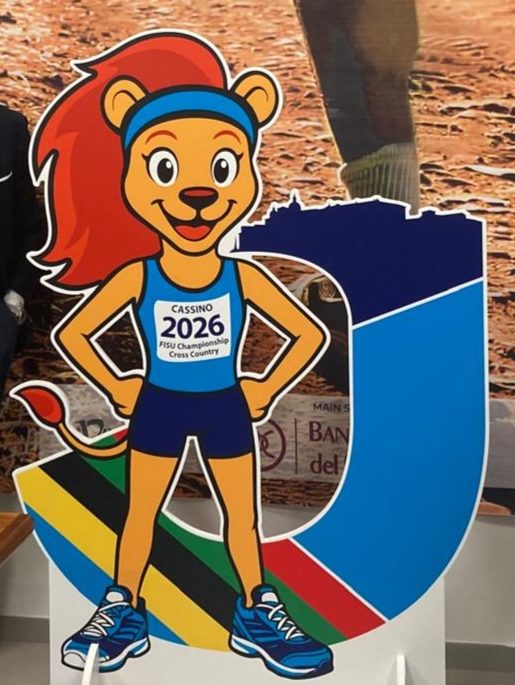
From that dream, a lioness was born.
She is not made of stone, but she carries its memory.
She does not defend borders, but connects paths.
She runs where her ancestors once stood watch.
The lioness embodies the ancient values of Cassino:
strength, which is not violence but resilience;
vigilance, which becomes focus and respect;
courage, which today means overcoming one’s own limits.
She runs across fields and trails, on packed earth that tells millennia-old stories, alongside students from all over the world. Each step becomes a dialogue between past and future, between those who once guarded and those who now build.
She does not run to dominate, but to share. She does not roar against anyone, but encourages everyone.
When the World University Championship Cross Country comes to life in Cassino, the Lioness is there: daughter of the stone lions, symbol of a city that has known war and chosen peace, that once protected its borders and now opens its paths.
As athletes run along the trails, it is as if the ancient lions—motionless for centuries—finally smile:
their spirit is still running, in the young heart of the world.